
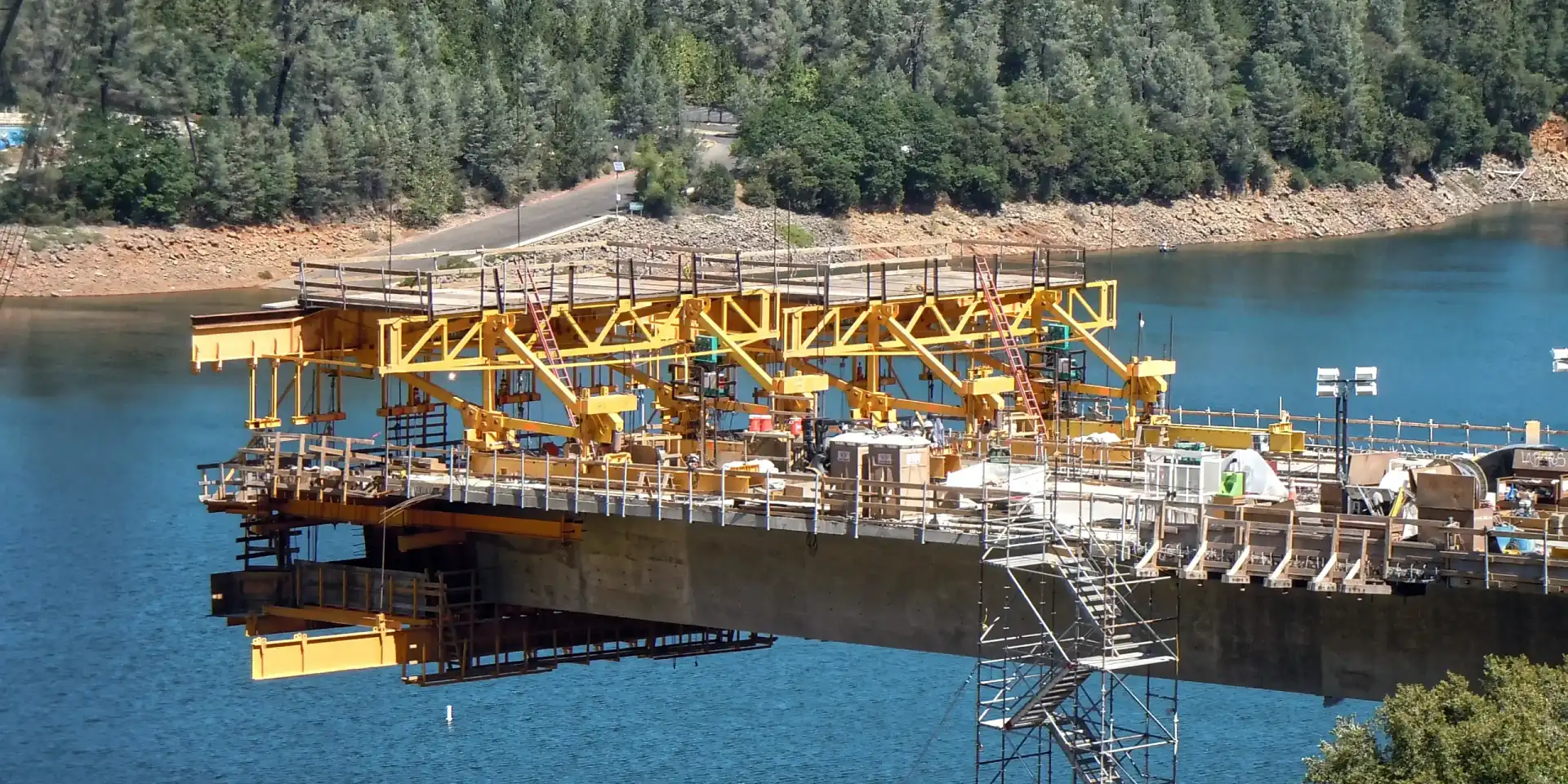
The I-5 Antlers Bridge Replacement project in Lakehead, California, was a pivotal infrastructure upgrade led by Caltrans to modernize the crossing over Shasta Lake’s Sacramento River arm. The original Antlers Bridge, constructed in 1941, no longer met seismic safety and traffic flow standards essential for a major interstate like I-5. In response, the state committed to replacing the aging steel truss bridge with a more resilient and efficient structure that could serve as a long-term asset to the region’s transportation network.
Completed in 2016, the new bridge spans approximately 1,942 feet and utilizes a concrete segmental box girder design constructed using the balanced cantilever method. This approach enabled efficient over-water construction while minimizing environmental impact. In recognition of its technical excellence and collaborative execution, the project received the 2017 American Segmental Bridge Institute (ASBI) Bridge Award of Excellence and honors from the California Transportation Foundation for outstanding transportation achievement.
Bridging Past and Future by building with precision and innovation.
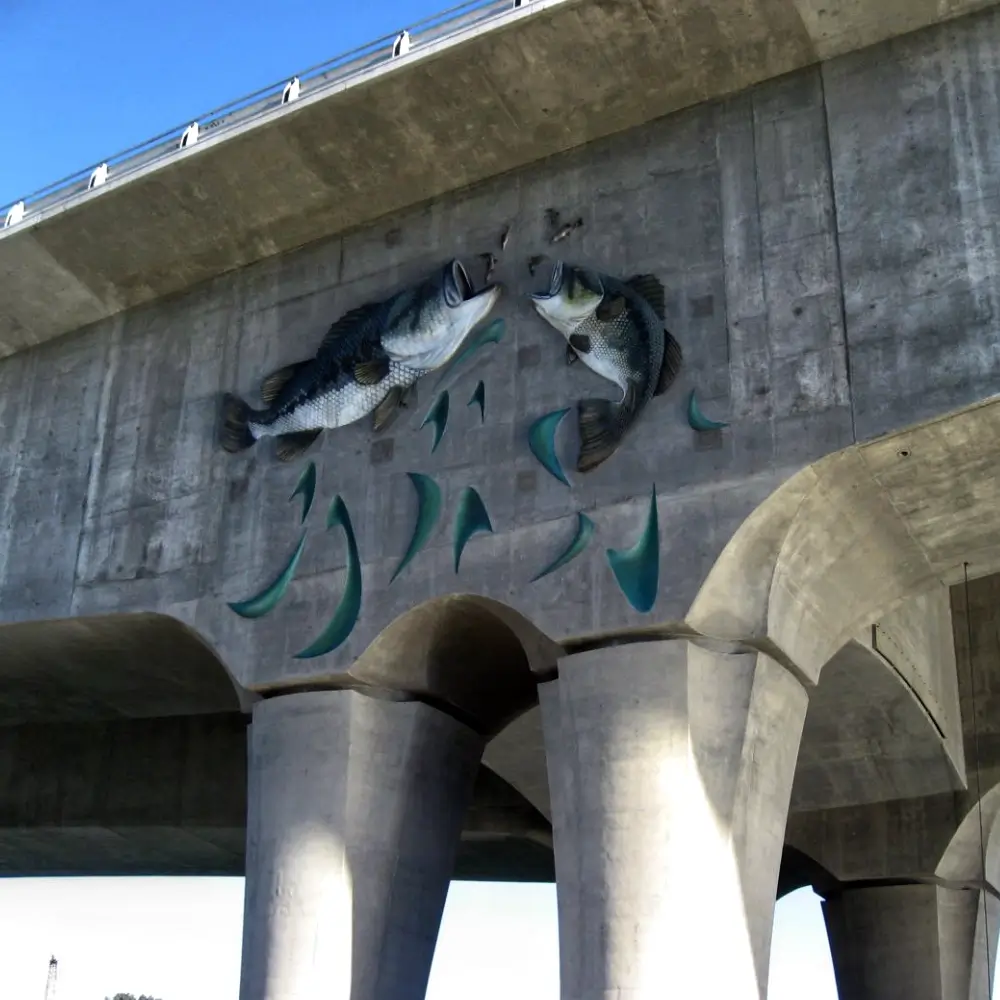
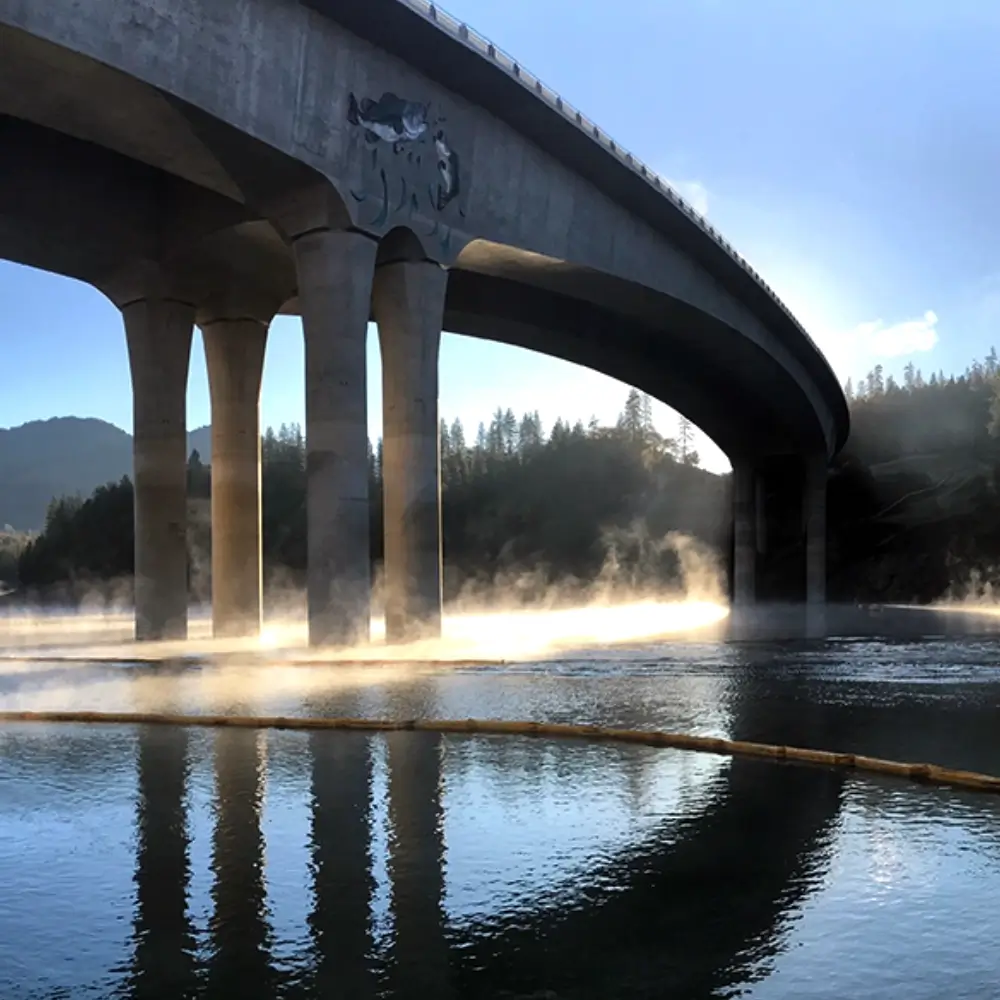
The primary objective of the Antlers Bridge Replacement project was to address structural deficiencies in the original bridge and ensure the safety and reliability of one of Northern California’s most important freeway corridors. The strategic vision emphasized seismic resilience, improved traffic capacity, and uninterrupted interstate connectivity for both passenger and freight vehicles. Caltrans sought to deliver a long-term solution that would withstand seismic risks, support regional growth, and meet modern highway design standards. By replacing a vital link on I-5, the project aimed to future-proof transportation infrastructure in the face of increasing demand. This vision aligned with state and federal goals for sustainable, resilient, and safe mobility systems.
- Demolition of the original 1941 steel truss bridge
- Construction of a new 1,942-foot-long concrete segmental box girder bridge
- Use of the balanced cantilever method for water-based construction
- Realignment of roadway approaches and improvements to traffic flow
- Installation of modern shoulders, barriers, and drainage systems
Situated near the town of Lakehead, the project crosses the Sacramento River arm of Shasta Lake—California’s largest reservoir by capacity. The site is surrounded by protected national forest lands and serves as a hub for outdoor recreation, making environmental protection a top priority during planning and construction. The sensitive context required coordination with environmental agencies to ensure habitat conservation and water quality safeguards. Construction activities were timed and designed to minimize disruptions to wildlife and recreational access. The bridge’s location within a scenic and ecologically diverse area added both logistical and regulatory complexity to the project.
- 2009–2010– Preliminary design concepts developed; project scoping initiated. Environmental studies began in parallel, focusing on habitat protection and lake impacts.
- 2010–2011– Completion of environmental documentation, permitting, and geotechnical investigations. Final design specifications were completed and submitted for regulatory approval.
- 2012– Construction officially launched. Initial work included site clearing, utility relocations, and foundation installation using deep pile systems appropriate for lakefront soils.
- 2013–2014– Major bridge superstructure work began, including segment fabrication and balanced cantilever assembly over the water. Parallel work on roadway realignments and new approaches progressed concurrently.
- 2015–2016– Final bridge deck placement, barrier installation, lighting, drainage, and paving. Traffic was shifted onto the new bridge structure while remaining finishing work continued.
- Late 2017– The bridge officially opened to traffic. Final inspections, environmental closeout, and landscape restoration were completed.
Innovative engineering methods played a key role in reducing the project’s ecological footprint. The balanced cantilever construction technique minimized disturbance to the lake by eliminating the need for temporary support structures. Sustainable materials and low-maintenance concrete segments were selected to enhance durability and reduce lifecycle costs. The project implemented water quality monitoring and stormwater management practices throughout the build phase. In addition, habitat preservation zones were enforced to protect aquatic and terrestrial species during construction. These environmentally conscious design choices helped the project meet both regulatory compliance and sustainability benchmarks.
The bridge replacement significantly enhanced traffic safety and reliability on I-5, benefiting thousands of daily motorists and commercial drivers. It ensured year-round access for emergency responders and maintained crucial freight routes essential to California’s economy. By eliminating a structural bottleneck, the project supported regional tourism, recreation, and long-haul transportation. Its completion also reassured local residents and stakeholders that public safety and environmental stewardship can be achieved simultaneously. The Antlers Bridge now serves as a resilient infrastructure model in a high-value ecological corridor.
Project Awards:
- 2017 American Segmental Bridge Institute (ASBI) Bridge Award of Excellence
Recognized for technical innovation, execution quality, and excellence in segmental bridge design and construction.
- California Transportation Foundation Honor for Outstanding Transportation Achievement
Awarded for delivering a high-impact infrastructure project that advanced safety, resilience, and statewide mobility objectives.
Connect with an ACE Quality Control Project Manager to see how our hands-on approach, technical depth, and disciplined oversight set us apart.