
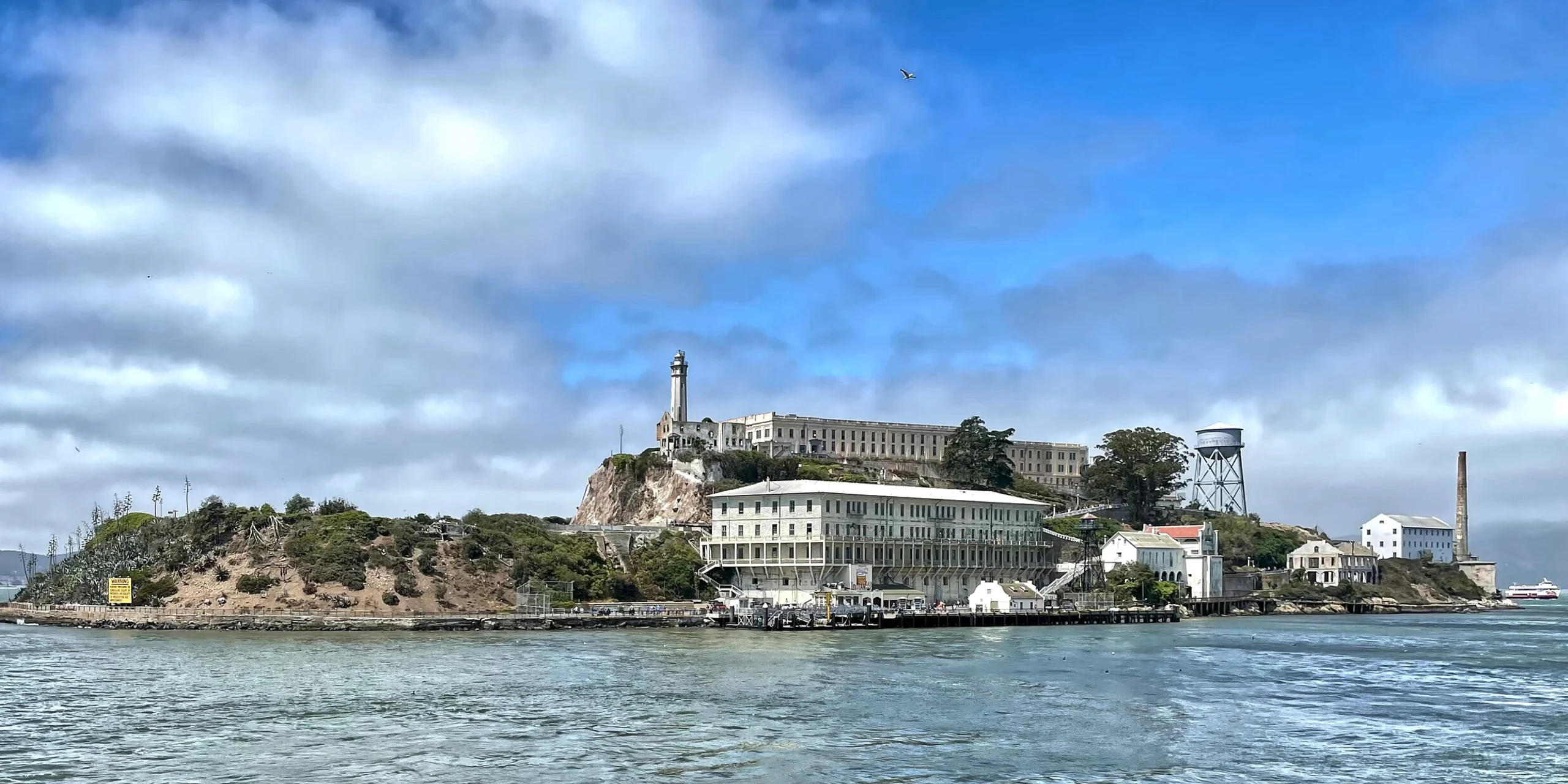
The Alcatraz Island Preservation Projects represent a multi-phase, long-term initiative led by T.L. Peterson, Inc. to rehabilitate and stabilize key historic features of one of the United States’ most renowned cultural landmarks. Situated in the Golden Gate National Recreation Area, Alcatraz Island is a former penitentiary and a National Historic Landmark that attracts over a million visitors annually. Commissioned by the National Park Service, the projects began in the mid-2000s and extended through 2015. The comprehensive scope included seismic retrofitting, architectural preservation, hazardous material abatement, and slope stabilization beneath critical structures. These efforts were planned and executed with the utmost sensitivity to Alcatraz’s marine setting and historic significance.
Slope stability repairs played a crucial role in protecting the foundations of major buildings, particularly the Main Cellhouse and Building 64, which are perched on exposed ridgelines above deteriorating terrain. The work included slope reinforcement using engineered fill, drainage controls, and anchoring systems to reduce erosion and prevent structural undermining. These enhancements were integrated alongside seismic and masonry repairs; all staged with minimal disruption to the island’s daily ferry-based tourism. The project overcame extreme logistical challenges—transporting materials by barge and coordinating operations with federal, environmental, and marine safety agencies. This preservation effort earned statewide and national recognition, including a 2014 Preservation Design Award and 2015 commendation from the National Trust for Historic Preservation.
Reinforcing the Past—Preserving Alcatraz from the Ground Up
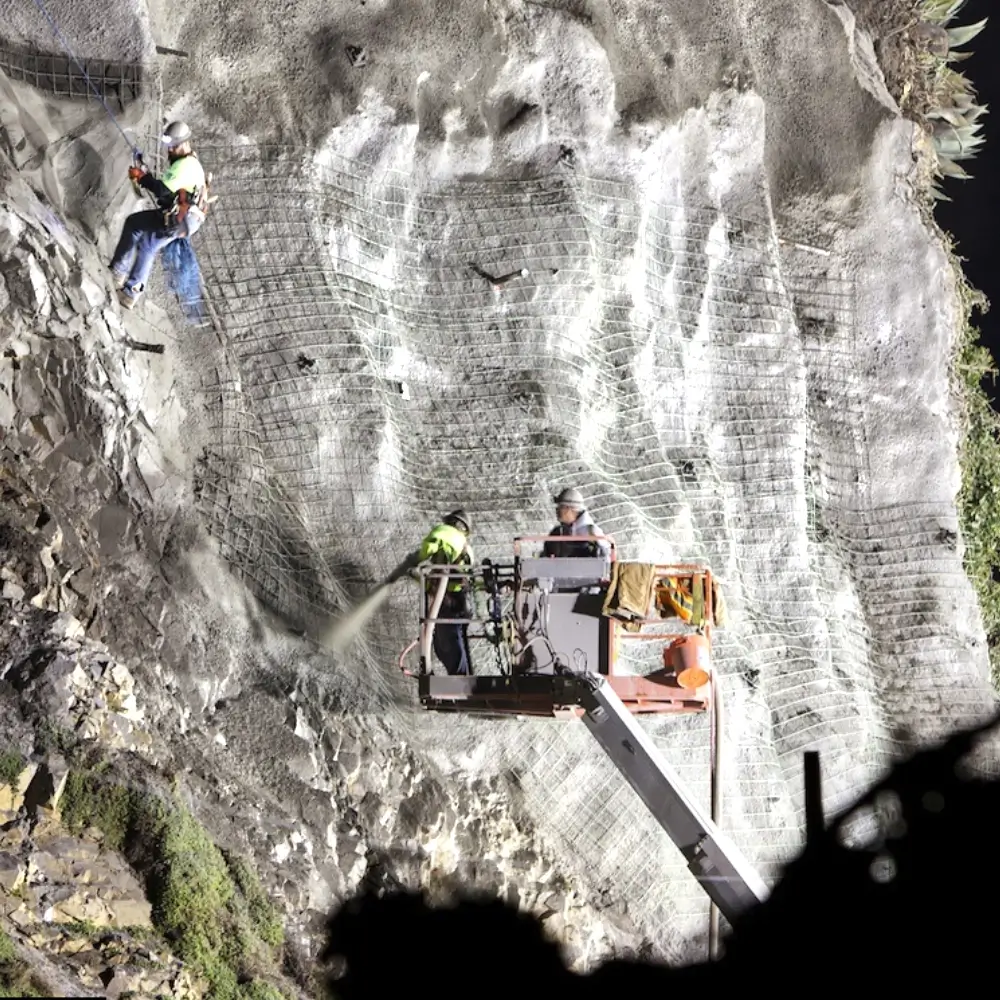
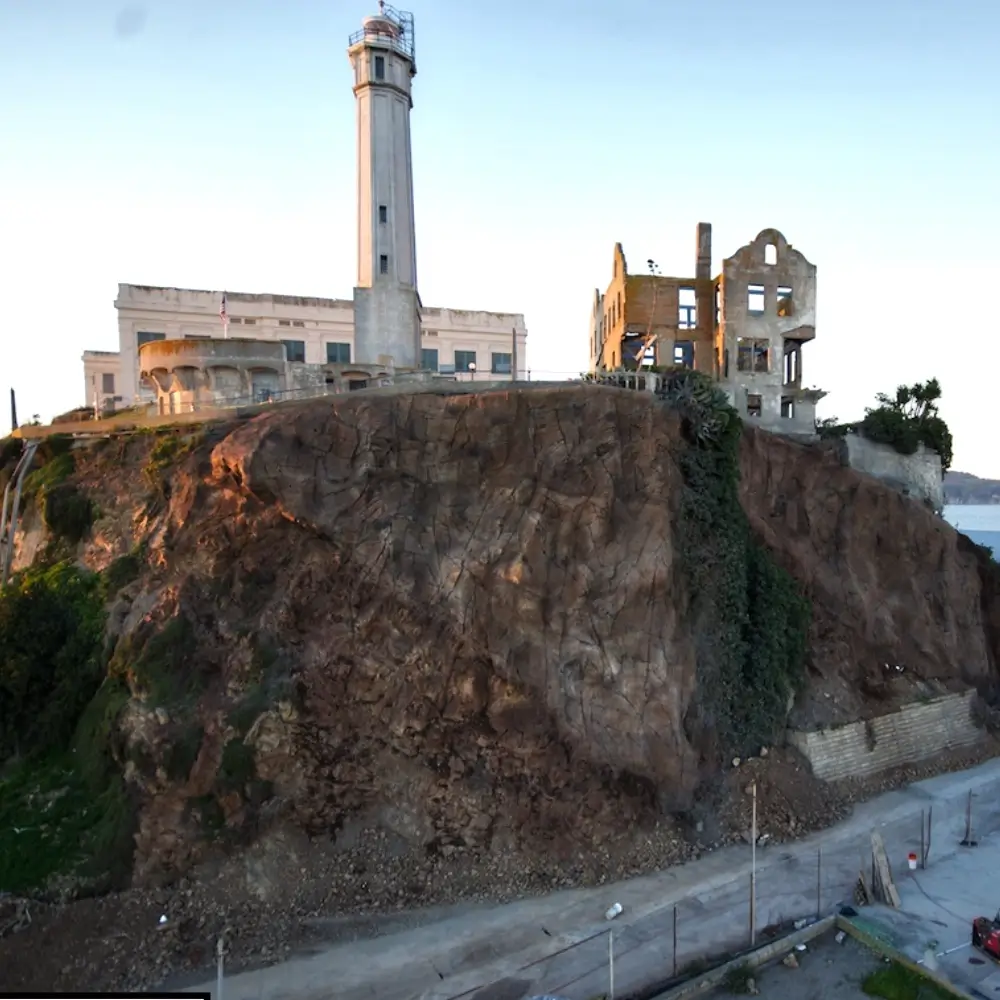
The strategic vision for this project was to extend the service life of Alcatraz Island’s historic assets while enhancing public safety and environmental resilience. The work adhered to National Park Service preservation guidelines and supported broader federal goals of sustainable heritage tourism. Slope stabilization addressed underlying geotechnical vulnerabilities that posed long-term risks to the island’s structures. All interventions were minimally invasive, historically sensitive, and focused on long-term site integrity. This balanced approach-maintained Alcatraz’s public accessibility while securing its future as a national landmark.
- Seismic retrofit and structural stabilization of the Main Cellhouse
- Roof and masonry restoration of Building 64 (officer’s quarters)
- Geotechnical slope stability repairs to protect building foundations
- Repair and preservation of deteriorating seawalls and circulation walkways
- Removal of hazardous materials including lead-based paint and asbestos
- ADA-compliant access and public safety upgrades
- Coordination with marine logistics, historical architects, and federal agencies
Alcatraz Island lies 1.25 miles offshore from San Francisco, accessible only by boat, and exposed to corrosive marine conditions. The island’s steep topography, combined with aging infrastructure and shallow bedrock, created slope stability risks under several primary structures. Frequent fog, wind, and salt air further accelerated environmental degradation. Daily tourist operations required that all preservation work be carefully scheduled to avoid public closure. The isolated, weather-exposed setting demanded complex logistics and adaptive engineering strategies for both structure and terrain.
- 2006–2008– Phase I: Emergency stabilization and roofing of Building 64
- 2009–2011– Seismic retrofitting and interior preservation of Main Cellhouse
- 2012–2015– Slope stabilization, seawall repairs, and walkway reconstruction
- Current Status:Completed
Sustainable design and construction methods were embedded throughout the project’s lifecycle. Reuse of original materials, recycling of construction debris, and encapsulation of hazardous substances minimized waste and reduced ecological impact. Slope stabilization was executed using low-profile, engineered systems to preserve the island’s natural contours. All work followed the Secretary of the Interior’s Standards for Historic Preservation and passed environmental compliance review. These techniques balanced innovation with tradition in a challenging and environmentally sensitive site.
By preserving the structural and geotechnical integrity of Alcatraz Island, the project enhanced visitor safety and ensured uninterrupted access to a landmark central to San Francisco’s cultural identity. Slope stability improvements protected major facilities and mitigated long-term risk to public access routes and exhibit spaces. The work supported heritage tourism, a key regional economic driver, while providing employment for local preservation contractors and skilled tradespeople. Educational value was enhanced through improved public circulation and interpretive access. Overall, the project helped secure the legacy of Alcatraz for future generations.
Connect with an ACE Quality Control Project Manager to see how our hands-on approach, technical depth, and disciplined oversight set us apart.