
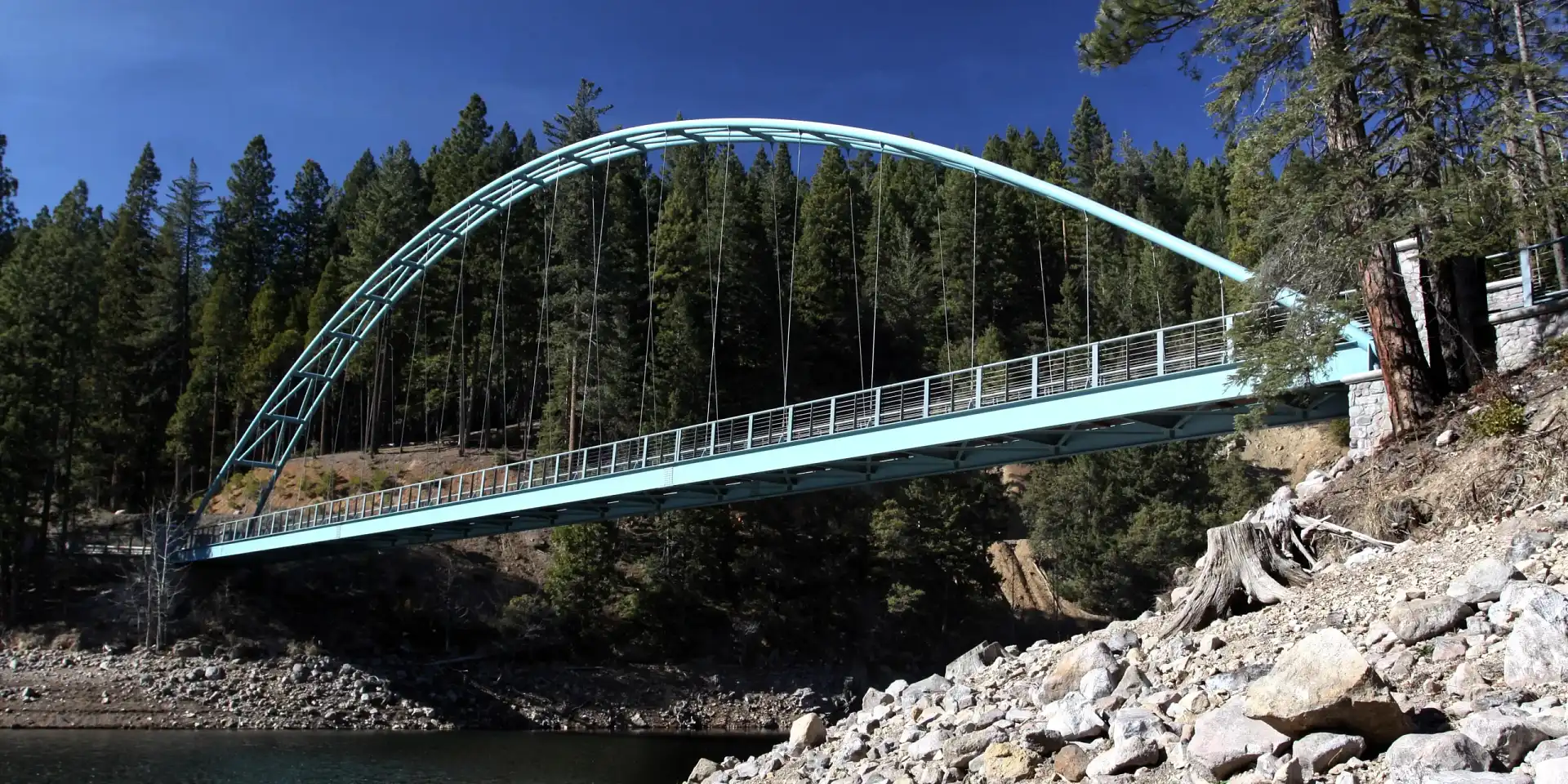
The Wagon Creek Bridge Project, completed in 2010, was a transformative recreational infrastructure development that enhanced pedestrian and cyclist mobility around Lake Siskiyou near Mount Shasta. As the final link in the Lake Siskiyou Trail loop, the project delivered a 500-foot-long suspension bridge that completed a continuous and scenic 7-mile multi-use trail. This new connection significantly improved safety and access for outdoor enthusiasts while promoting healthy lifestyles through year-round recreation.
The project was funded through a diverse coalition of public and private sources, including $1.01 million from State Transportation Enhancement Activities, $1.2 million from the American Recovery and Reinvestment Act of 2009, and a $600,000 grant from the McConnell Foundation. Designed to minimize environmental impact while enhancing community assets, the bridge complies with all relevant pedestrian safety and environmental protection standards.
Connecting Communities to Nature: A scenic suspension bridge that completes the Lake Siskiyou Trail while promoting wellness, tourism, and environmental harmony.
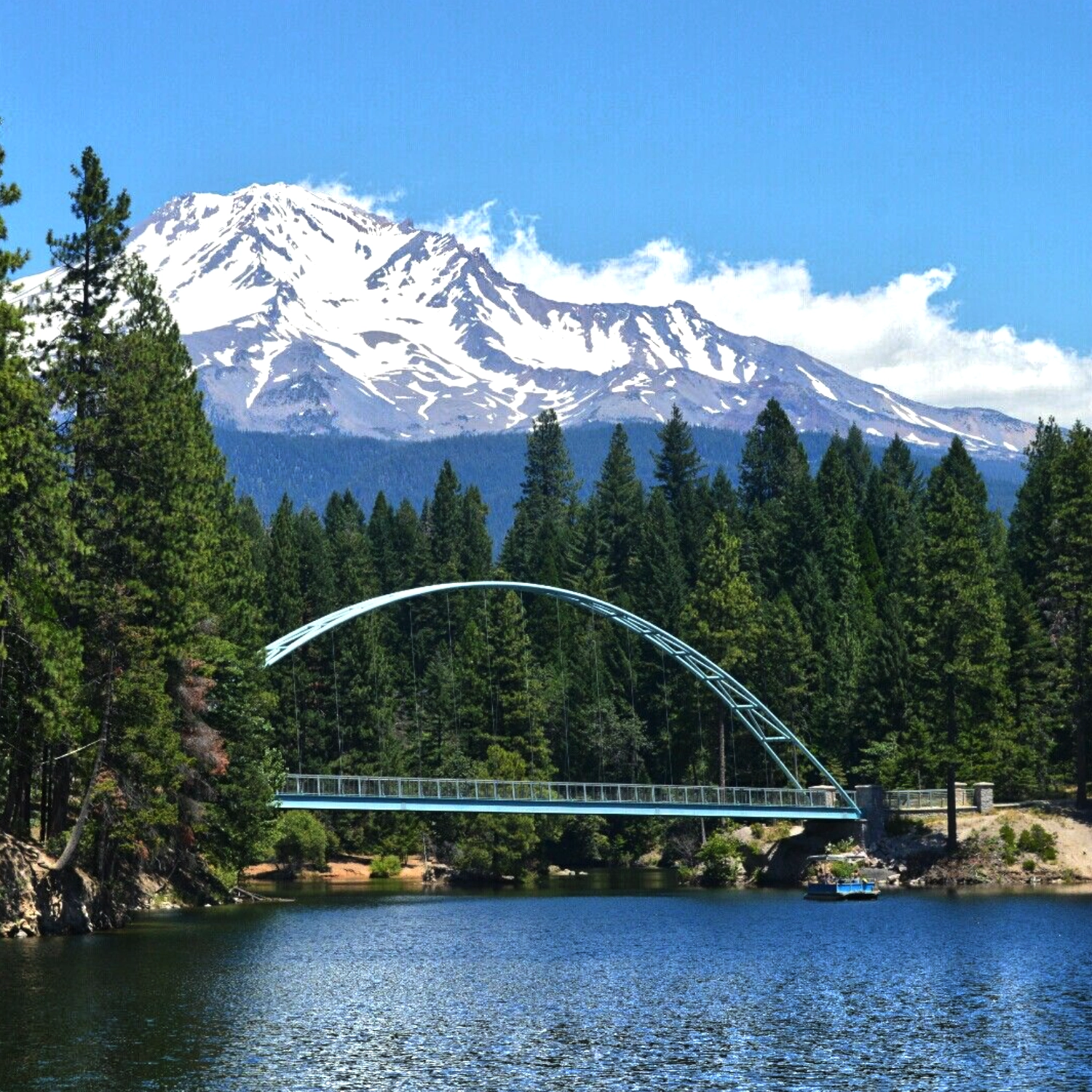
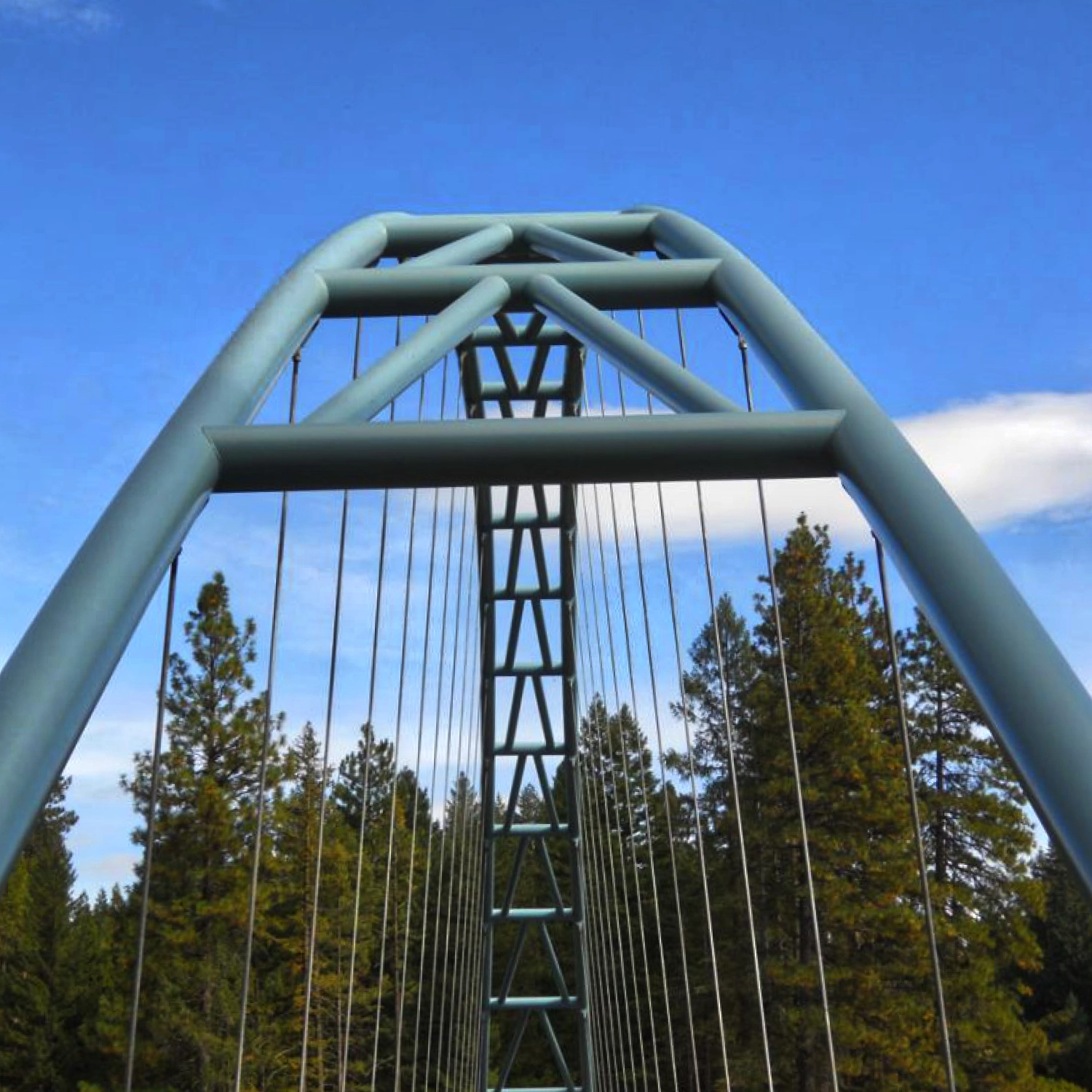
The strategic vision behind the Wagon Creek Bridge Project centered on enhancing outdoor access while encouraging sustainable tourism and community health. By completing the Lake Siskiyou Trail loop, the project provided a fully connected, safe, and accessible recreational path for hikers, cyclists, runners, and families. The bridge reinforced the region’s identity as a destination for nature-based experiences and supported local economic vitality through increased tourism. Additionally, it reflected Siskiyou County’s long-term commitment to green infrastructure and public well-being. The project showcased how thoughtful planning can leverage infrastructure for both ecological and social benefits.
- Design and construction of a 500-foot-long pedestrian suspension bridge
- Final trail link to complete the 7-mile Lake Siskiyou loop
- Use of environmentally sensitive materials and erosion control strategies
- Installation of structural reinforcements and pedestrian safety railings
- Surface grading and enhancements to improve universal trail accessibility
The bridge crosses the Wagon Creek arm of Lake Siskiyou, a pristine and remote location known for its alpine scenery and recreational value. With views of Mount Shasta and dense forest surroundings, the setting demanded a design approach that prioritized ecological preservation and visual harmony. Construction activities were carefully staged to protect sensitive habitats and maintain water quality, with oversight from local environmental agencies. The bridge was engineered to blend naturally with its surroundings, enhancing the trail experience without disrupting the landscape. As a result, the site now serves as a model for integrating infrastructure into scenic environments.
- 2009– Full project funding was secured, and final design work was completed. Environmental permitting and inter-agency coordination were also finalized to ensure regulatory compliance.
- Early 2010– Construction commenced with site clearing, foundation work, and fabrication of key bridge elements off-site.
- Mid–Late 2010– The suspension bridge was erected using low-impact techniques, followed by installation of railings and final trail grading.
- October 2010– The bridge officially opened to the public, completing the Lake Siskiyou Trail and launching a new era of recreation and tourism for the region.
Sustainability was a core principle in the execution of the Wagon Creek Bridge Project. The design emphasized the use of low-maintenance, long-lasting materials that could endure the elements with minimal upkeep. Erosion control systems and construction buffers helped preserve the surrounding ecosystems during and after construction. Innovative use of prefabricated components reduced on-site disruption and expedited the build timeline. The project also prioritized visual integration into the natural landscape, maintaining the scenic integrity of the lake and forest setting. These elements collectively contributed to a sustainable, low-footprint recreational asset.
Since its completion, the Wagon Creek Bridge has dramatically expanded recreational access and enhanced Siskiyou County’s profile as an outdoor tourism destination. The completed trail loop has increased foot traffic to local businesses, supported outdoor fitness and wellness, and encouraged families to engage with the natural environment. It has become a celebrated community landmark, drawing residents and visitors alike to the region. The project demonstrates how small-scale infrastructure, when thoughtfully implemented, can create outsized benefits for public health, environmental appreciation, and regional economic development. It remains a lasting symbol of community vision and natural connectivity.
Connect with an ACE Quality Control Project Manager to see how our hands-on approach, technical depth, and disciplined oversight set us apart.